If you’re in the textile game, you’ve probably run into polyester double covered yarn (PDCY) at some point—whether it’s in sportswear, hosiery, upholstery, or even technical fabrics. For anyone supplying PDCY (that’s me, by the way), one of the most common questions I get from mill owners, designers, and small-batch makers is this: “Can I blend PDCY with other fibers to get the exact feel, performance, or cost I need?” Polyester Double Covered Yarn
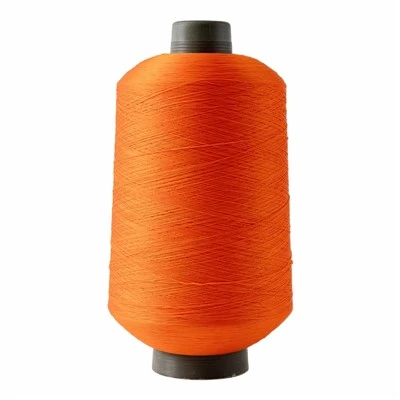
Short answer: Yep, you definitely can. But like any textile mix, it’s not just dumping a spool of PDCY next to cotton or silk and calling it a day. There’s a little science to it, and as someone who’s been crafting and supplying PDCY for over a decade, I’ve learned the hard way which blends work, which flop, and how to avoid the mistakes that end up with a batch of yarn that won’t knit right or falls apart after a few washes.
First, let’s do a quick refresh for anyone who might not know what PDCY is, because that’s the foundation here. Polyester double covered yarn is basically a core yarn—usually a stretchy one, like spandex or sometimes polyester filament—wrapped twice with a outer layer of polyester filament. The double wrap is key: it locks in the core’s stretch, makes the yarn durable, and gives it a smooth, consistent surface. That stretch and durability is why PDCY is such a workhorse, but blending it with other fibers lets you tweak things like softness, breathability, or cost that straight PDCY can’t match on its own.
Now, let’s break down the most common blends, how they work, and why you’d bother mixing PDCY with other fibers in the first place. I’ve worked with all these, so I’ll share real-world examples from clients I’ve supplied to, not just textbook stuff.
Cotton and PDCY blends are super popular—probably the top request I get. Why? Cotton is soft, breathable, and has that natural, “organic” vibe that consumers love, while PDCY adds stretch and longevity that 100% cotton lacks. Think about the tights you wear, or the activewear tee that doesn’t bag at the knees: that’s almost always a cotton-PDCY blend. The sweet spot here is usually 70% cotton, 30% PDCY, but I’ve had clients go as low as 20% PDCY for basic tees and as high as 50% for high-stretch yoga pants.
The trick with cotton and PDCY, though, is twist and tension. Cotton is a staple fiber, which means it’s shorter than the continuous filament of polyester, so you have to make sure the wrap on the PDCY doesn’t get stretched too tight when you ply the two together. If you do that, the cotton can snap or create a slubby, uneven yarn. I once had a new client try to mix 80% cotton and 20% PDCY without adjusting their spinning machine, and the result was a yarn that broke every other stitch when we knitted a test swatch. We had to dial back the wrap tension on the PDCY, and suddenly that blend worked like a charm—soft, stretchy, and held up 3x longer than 100% cotton.
Then there’s polyester double covered yarn blended with nylon. Nylon is another synthetic, so they play really well together. Nylon adds even more durability than PDCY, and it has a silkier sheen that’s great for lingerie, hosiery, or dress fabrics. I supply a lot of this blend for costume designers, who want fabric that looks fancy onstage but can handle lots of movement. The key here with nylon-PDCY blends is matching the filament denier—if your PDCY has a 200 denier outer wrap, you don’t want to pair it with a 50 denier nylon; that’ll result in a lopsided yarn. Most of my clients use equal parts or a slight lean toward nylon, because the sheen and strength are worth the extra cost. I also had one outdoor gear client use 60% nylon, 40% PDCY for backpack straps—way tougher than 100% nylon, and it doesn’t pill as bad over time.
What about natural fibers that aren’t cotton? I’ve had requests for PDCY blended with silk, merino wool, even bamboo. Silk and PDCY is a luxury blend for scarves and high-end loungewear: silk gives that lightweight, lustrous feel, and PDCY adds just enough stretch so the scarf doesn’t slip off your shoulders. The catch with silk, though, is that it’s more delicate than cotton or nylon, so you have to use a finer PDCY core (usually 40D spandex instead of 70D) to avoid putting too much tension on the silk during twisting. Merino wool blends are a bit trickier because wool is hygroscopic—it absorbs moisture—and polyester is hydrophobic, so sometimes the blend can feel a little clammy if the ratio is off. I’ve found that 50% merino, 50% PDCY works best for base layers; it’s warm, stretchy, and doesn’t get that smelly, damp feel that 100% merino can get after a long hike.
Wait, can you blend PDCY with other synthetics besides nylon? Absolutely—think acrylic, for fuzzy blankets or fleece fabric. Acrylic is cheap and soft, and blending it with PDCY adds stretch so the blanket doesn’t lose its shape after years of washing. I once supplied a batch of 30% PDCY, 70% acrylic to a big home goods brand, and their top-selling fleece blanket still looks the same after 5 years of customer reviews. No sagging, no holes—just the right amount of give.
Now, let’s talk about the mistakes people make when blending PDCY, because I’ve seen too many clients waste time and money on bad blends. First, not matching shrinkage rates. Polyester and most other fibers have different shrinkage when you wash or heat-set them. If your PDCY has a 5% shrink rate and your cotton has a 10% shrink rate, after the first wash, the cotton will shrink more and pull on the PDCY—resulting in a tight, puckered fabric. I always recommend testing a small sample of your blend in the conditions you’ll use it in (wash temp, dryer heat, whatever) before committing to a big order. Last year, a client wanted to make a line of swimwear with PDCY and rayon, and they didn’t test shrinkage first. Their first batch came out of the washer 2 sizes too small—total loss of 500 yards of yarn, which is a huge hit for a small business.
Another big mistake: using the wrong PDCY structure for blending. PDCY comes in different core types—some are spandex core, some are polyester filament core, some are rubber core. If you’re blending with natural fibers that don’t need super high stretch, a spandex-core PDCY is overkill and will make the blend too stretchy. If you’re blending for a heavy-duty upholstery fabric, a rubber-core PDCY is too stretchy, so you want a polyester filament core. I always ask my clients what their end use is before recommending a PDCY type to blend, because that’s half the battle.
Also, let’s address a question I get a lot: “Will blending PDCY with other fibers affect its performance?” The short answer is, if you do it right, it can improve it. Straight PDCY is great, but it can feel too plasticky or too stretchy for some uses. Blending with cotton adds softness, blending with silk adds sheen, blending with merino adds warmth. The only time it hurts performance is when you mess up the twist, tension, or shrinkage rates. I’ve had clients come to me after a bad blend they did themselves, and I can usually fix it by adjusting the PDCY’s wrap or denier to match the other fiber.
Wait, is there any fiber you shouldn’t blend with PDCY? I’ve found that blending PDCY with very fine, fragile fibers like cashmere can be tricky, because cashmere is so fine that the double wrap of PDCY can rub against it and cause pilling. If you really want a cashmere-PDCY blend, you have to use an extra-smooth PDCY with a high-quality outer wrap, and go light on the PDCY—like 10% PDCY, 90% cashmere. That works for soft scarves, but not for high-wear items like sweaters. I’ve also found that blending with 100% linen can be hit or miss, because linen is stiff, so the blend can end up scratchy. But if you use a very soft PDCY and go easy on it, it works for lightweight summer clothes.
As a PDCY supplier, I’ll be honest: most of the clients I work with aren’t blending PDCY just for fun. They’re doing it to meet a specific demand: a consumer wants a tights that’s not too tight, a yoga pant that doesn’t bag, a blanket that’s cheap but durable. PDCY is a versatile yarn, but blending it with other fibers lets you customize it to exactly what your end user wants. That’s why I’ve spent years refining my PDCY options—different deniers, different cores, different wrap styles—because I know that no single blend works for everyone.
If you’re thinking about blending PDCY with other fibers, here’s my advice: first, figure out what your end product needs. Do you need stretch? Durability? Softness? Breathability? Then, pick a base fiber that checks the boxes, and add PDCY in a ratio that makes sense. Test a small sample first—don’t buy 1000 yards before you know it works. And if you’re not sure, reach out. I’ve helped so many clients tweak their blends, adjust their PDCY specs, and avoid the mistakes that waste time and money.
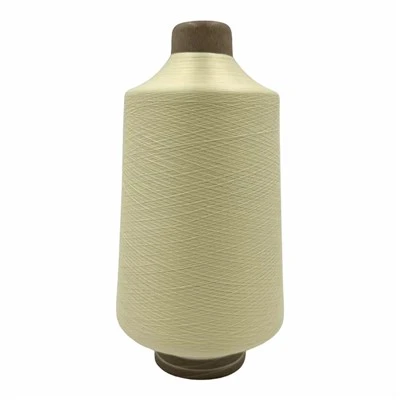
At the end of the day, polyester double covered yarn blending isn’t some complicated, secret process. It’s just about matching properties, testing, and working with a supplier who knows their stuff. I’ve been in this business long enough to tell you that the best blends aren’t the ones with the most exotic fibers—they’re the ones that work for the product you’re making. So if you’re ready to experiment with blending, or you just want to know what PDCY is best for your next project, don’t hesitate to connect. I’m here to help you get the blend right, no matter what you’re making.
Imitation Nylon Yarn References:
- Textile Institute. (2020). Blending of Synthetic and Natural Fibers: Performance Characteristics. Textile Progress.
- Prabhu, H. N. (2018). Double Covered Yarns: Structure, Properties, and Applications. Journal of Industrial Textiles.
- ASTM International. (2019). Standard Test Methods for Shrinkage of Textile Yarns and Fabrics. ASTM D4964.
Zhuji Yuanhui Import & Export Co., Ltd.
Zhuji Yuanhui Import & Export Co., Ltd. is one of the most professional polyester double covered yarn manufacturers and suppliers in China. With abundant experience, we warmly welcome you to buy high-end polyester double covered yarn made in China here from our factory. If you have any enquiry about quotation and free sample, please feel free to email us.
Address: No.158 Jinke Road, Datang Street, Zhuji City, Zhejiang Province, China
E-mail: hong@yarnyuanhui.com
WebSite: https://www.yarnfty.com/
