If you’ve ever dealt with TPE or TPR compounds—whether as a product designer, manufacturer, or even someone just sourcing flexible parts for everyday items (think phone cases, shoe soles, or medical gaskets)—you’ve probably run into this question: can TPE actually be recycled more than once? I get asked this all the time, both by new clients who’re just getting into circular manufacturing and long-time partners who’re trying to cut down on waste. As someone who’s been a TPE/TPR compounds supplier for over a decade, I’ve had to dig into this myself too, because there’s a lot of misinformation floating around out there. A lot of people lump all rubber-like plastics into one “can’t recycle” bucket, but TPE is different—it’s a thermoplastic elastomer, not a thermoset, so that’s a big head start. But does that mean you can just loop it over and over without losing quality? Let’s break this down, no jargon, just real talk from someone who works with this stuff daily. TPE and TPR Compounds
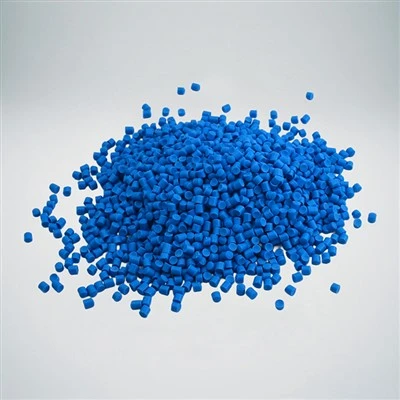
First, let’s clarify the basics so we’re on the same page. TPE (Thermoplastic Elastomer) and TPR (Thermoplastic Rubber) are often used interchangeably, though there’s a tiny technical difference: TPE is the broader category, TPR is a subset that’s more rubber-like. The key thing here is thermoplastic—unlike thermoset rubber (which vulcanizes and stays hard once set, no melting it down), thermoplastics soften when heated, harden when cooled, so theoretically they can be melted, reshaped, and processed again. That’s why TPE is way more recyclable than, say, cured silicone or EPDM rubber. But here’s the catch: every time you do that reprocessing, something happens to its molecular structure. Think of it like cooking a burger: cook it once, it’s juicy and holds its shape; cook it twice, it gets dry and crumbly; cook it three times, it falls apart. Same idea with TPE.
Now, let’s talk about how recycling TPE actually works, because it’s not just tossing old parts into a machine and making new ones. First, you have to sort the scrap. TPE comes in so many formulations—soft shore A (like a phone case that’s squishy), hard shore D (like a shoe heel that’s firm), medical-grade (which has strict purity rules), food-grade, and then there’s TPE blended with other plastics like PP or ABS. If you mix soft TPE with hard TPE, or medical-grade with industrial scrap, the blend doesn’t play nice during reprocessing. I’ve seen this happen at our plant: a client once sent a mix of old toy TPE and gasket TPE, and after one regrind, the tensile strength dropped 30% because the two incompatible formulations didn’t melt uniformly. That’s why sorting is non-negotiable.
Then there’s the reprocessing step itself. When you melt TPE again (usually in an extruder or injection molder), you’re subjecting it to heat, shear force (that’s the twisting and pushing of the machine screw), and sometimes even oxygen. All three of these break down the polymer chains. TPE’s elasticity comes from those long, cross-linked polymer chains—every reheat-shake-cool cycle shortens those chains a little. One time, we ran a test on a soft 50A TPE: first reprocessing, it retained 85% of its original elongation at break (that’s how much it can stretch before breaking). Second reprocessing, that dropped to 68%. Third time? It was down to 42%—so stretch it just a little too far, and it snaps. That’s not usable for most products, like a yoga mat or a grip, that need to flex repeatedly.
Wait, but hold on—does that mean zero multiple recycling? No, not exactly. There’s a difference between mechanical recycling (melting and reshaping without adding anything) and chemical recycling (breaking down the polymer into its raw monomers, then rebuilding it into new TPE). Mechanical recycling is the kind most people use, and that’s where the limits are. But some TPE formulations are actually designed for multiple mechanical recycling cycles. We make a line of circular TPE compounds right now that are formulated with stabilized polymer chains—they have additives that resist heat and shear degradation. Those can go through 3 or 4 mechanical reprocessing cycles before you start seeing that quality drop. But even then, after four times, you’ll need to add some virgin resin or compatibilizers to bring it back up to standard. Chemical recycling? That’s a whole other ballgame. We’re testing that with a few clients right now—breaking down post-consumer TPE back to its base chemicals, then reforming it into new TPE that’s nearly identical to virgin. But chemical recycling is more expensive, so it’s not for every use case yet.
I also get a lot of questions about post-consumer vs. post-industrial TPE scrap. Post-industrial is the scrap that comes from our own plant—sprues, offcuts, mis-molded parts. That’s way easier to recycle multiple times because it’s clean, we know exactly what formulation it is, and there’s no contamination from other plastics or food waste. We actually reprocess 90% of our post-industrial TPE scrap on-site, and it goes through about 3 cycles before we blend in 20% virgin resin to make new compounds. That’s a big win for our waste reduction—we used to send all that scrap to the landfill, now we barely send 5% a year. Post-consumer scrap, though? That’s the stuff you get from old phone cases, shoe soles, or toy parts. That’s way more contaminated—you might have leftover paint, dirt, adhesives, or even a mix of TPE and hard plastic. That only works for 1 or maybe 2 mechanical cycles before contamination ruins it. I had a client last year who tried to recycle old garden hose TPE; after the first reprocessing, there was leftover rubber additive that made the new TPE crack when exposed to sunlight, so it was useless for outdoor use.
Another thing people miss: the end product’s required performance. If you’re making a garden hose that just needs to hold water, maybe you can use TPE that’s been recycled twice. But if you’re making a medical mask seal that has to be sterile and flex 10,000 times, you can’t use twice-recycled TPE—it won’t hold up. That’s the biggest factor in how many times TPE can be recycled: what are you making it for? If the part only needs to be rigid for a few uses, maybe 4 cycles work. If it’s a flexible, high-performance part, max 2 or 3, and often you can only use 1 recycled load.
So let’s wrap up what we’ve learned here, no beating around the bush. Can TPE be recycled multiple times? Yes, but with a lot of caveats. It depends on: 1) if it’s post-industrial (clean, easy) vs. post-consumer (contaminated, hard), 2) the specific formulation (stabilized vs. standard), 3) how many times you run it through mechanical reprocessing (usually 3-4 max before quality drops too much), and 4) what you’re using the recycled TPE for. If you’re willing to blend some virgin resin or use chemical recycling, you can stretch that number a little—maybe 5 cycles for stabilized industrial TPE, but again, cost goes up.
Now, as a supplier, I know how important circularity is for brands these days. Consumers are asking for less waste, regulations are getting stricter on plastic scrap, so we’ve been leaning into circular TPE hard. We’ve got a team that works directly with manufacturers to test their scrap, sort it, and process it into usable recycled compounds. If you’re a brand that’s sitting on unused TPE scrap, or you want to adjust your product design to use more recycled TPE, we can walk you through what works, what doesn’t, and how to make it cost-effective. No sales pitch, just real advice based on years of hands-on work with TPE recycling.
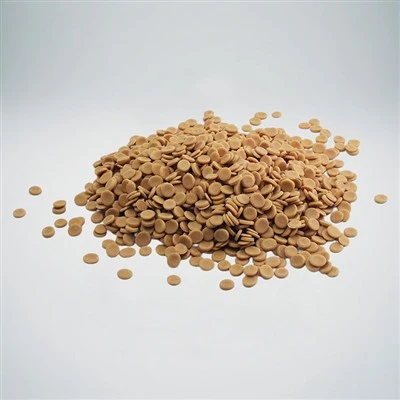
At the end of the day, TPE is way more recyclable than other elastomers, but it’s not infinite. The key is planning: designing parts for recyclability (so no mixed plastics, easy to separate), working with a supplier that knows TPE’s limits, and pairing mechanical recycling with small doses of virgin resin or chemical processing where it makes sense. If you’re ready to talk through how to incorporate recycled TPE into your line, or how to get more value out of your post-industrial scrap, reach out to our team to connect with a specialist. We can run a test on your specific scrap, give you a clear number of how many times it can be recycled, and come up with a solution that fits your budget and sustainability goals.
Thermoplastic LSZH Cable Compounds References:
- European Plastics Converters (EuPC). 2022. "Thermoplastic Elastomer Recycling: Challenges and Opportunities."
- American Chemistry Council (ACC). 2023. "Performance Characteristics of Recycled TPE Compounds."
- Society of Plastics Engineers (SPE). 2021. "Circular Manufacturing for Elastomers: Multiple Reprocessing Impacts on TPE."
- Journal of Applied Polymer Science. 2020. "Molecular Degradation of TPE During Mechanical Recycling Cycles."
Opta New Materials (Jiangsu) Co., Ltd.
As one of the most professional TPE and TPR compounds manufacturers and suppliers in China, we also support customized service. We warmly welcome you to buy bulk durable TPE and TPR compounds from our factory. If you have any enquiry about free sample, please feel free to email us.
Address: No.80, Jingang Avenue, Zhenjiang New Area, Zhenjiang City, Jiangsu Province, China.
E-mail: le.yin@optachem.com
WebSite: https://www.optanewmaterials.com/
