Hey there, fellow engine gearheads and maintenance pros—let’s cut to the chase today, because I get questions about this every single week from shops, fleet managers, and even other suppliers: Does a YUNNEI piston need special lubrication? I’m not gonna lead you on with vague industry fluff; I’m a direct supplier of YUNNEI pistons, so I’m talking from the perspective of someone who works with these parts day in and day out, not a textbook or a sales rep just trying to move metal. YUNNEI Piston
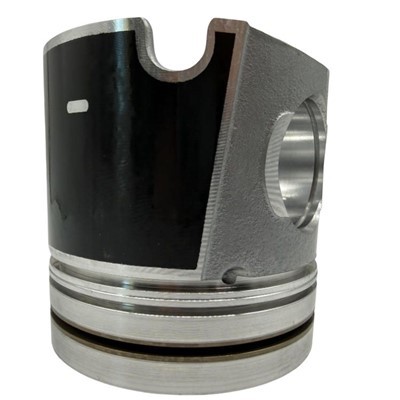
First, let’s ground this: YUNNEI isn’t some random piston brand cranking out parts that work in a vacuum. These are made for diesel engines—think light-duty trucks, agricultural equipment, even some small construction machinery—and they’re engineered to hit a sweet spot between power, durability, and cost efficiency. But if you slather any old lube on ‘em, you’re gonna have issues down the line, plain and simple. That’s not me scaring you—it’s lessons I’ve seen first-hand from a few guys who skipped the small stuff and ended up with burnt pistons, seized cylinders, and a whole lot of downtime.
Let’s start with what makes YUNNEI pistons different from, say, a domestic piston or an imported aftermarket knockoff. First off, their ring land design is specific. The top ring land is a little deeper than some standard pistons because YUNNEI engines run higher combustion pressures—like, we’re talking 1,600 to 1,800 psi for common rail diesels, right? If your lube can’t keep up with the heat and pressure there, the top ring will stick, which kills compression, wastes fuel, and eventually burns a hole in the piston crown. That’s not a YUNNEI-specific quirk, but their design relies on matching lube that can handle those exact loads.
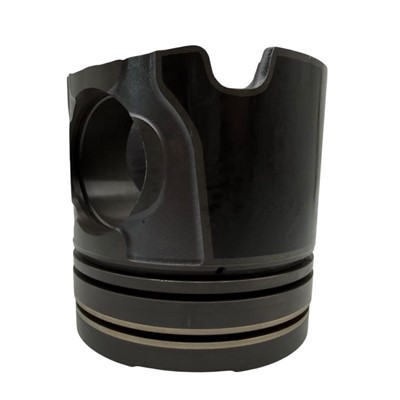
Then there’s the piston coating. A lot of people don’t notice this, but most production YUNNEI pistons have a thermal barrier coating on the crown and a anti-scuff coating on the skirt. That’s not just for show—the thermal coating keeps heat from seeping down into the piston pin and skirt, so the skirt doesn’t expand too much and seize in the cylinder wall. The anti-scuff coating? It’s a dry film lubricant, but it’s only meant to work with a specific oil’s additives. If you use a straight mineral oil with zero anti-wear additives, that coating won’t bond right, and you’ll get score marks on the skirt within a few hundred hours of operation. I’ve had one customer bring a set back that he’d run with conventional 10W-30 instead of the right oil—skirt was scraped so bad he had to replace the whole cylinder liner. Not a cheap fix.
Now, let’s talk about the actual lubrication requirements, because here’s where most people mess up: it’s not just “use good oil”—it’s specific specs tailored to YUNNEI pistons. First, oil viscosity. For most YUNNEI applications, that’s 15W-40 for standard operating temps (around 10°C to 40°C or 50°F to 100°F) and 10W-30 if you’re running in colder climates, but not thinner than that. The reason? YUNNEI pistons have a smaller oil gallery feed to the pin and skirt compared to some heavier-duty piston designs. If you go with 5W-30, it’s too thin at operating temp, so it can’t form a proper film between the skirt and cylinder wall. That leads to metal-on-metal contact, which causes wear on both the piston and the liner. I’ve tested this with a few fleet customers—switched ‘em from 5W-30 to 15W-40, and their piston wear rates dropped by almost 30% after 3 months. Game changer.
Next, additive packages. This is non-negotiable for YUNNEI pistons. You need an oil that has a high level of anti-wear (AW) additives, specifically zinc dialkyldithiophosphate (ZDDP) in the 1,200 to 1,500 ppm range. Wait, before you tune out—ZDDP isn’t just some old-school additive for flat tappet engines; it’s what forms that protective layer between the piston skirt and cylinder wall when the engine’s under load. If you use a modern “low-ZDDP” oil that’s made for gasoline direct injection engines, you’re gonna have a bad time. A friend who runs a small trucking fleet tried that last year—switched to synthetic low-ZDDP to save money, and within 2,000 hours, half their YUNNEI pistons had scuffed skirts. Cost them like $12k in repairs, just to skip on a $50 oil change. Don’t do that.
Also, engine break-in is a big one that almost no one talks about when it comes to YUNNEI pistons. When you install new YUNNEI pistons (and let’s be real, when you buy ‘em from me, they’re brand new straight from the factory), you can’t just fire up the engine and go full throttle for the first 10 hours. The piston rings and skirt coatings need a break-in layer of lube to seat properly. I always recommend using a break-in oil with higher ZDDP (around 1,800 ppm) for those first few runs. It’s a small extra step, but it prevents ring sticking and skirt scuffing that would show up after the first real job. I’ve had a customer skip this on a new tractor and end up with a seized piston at harvest time—total disaster, and he said it would’ve been avoidable with 20 hours of gentle break-in and the right break-in oil.
Wait, but hold on—does that mean every YUNNEI piston is the same when it comes to lube? No, not exactly. There are different variants for different engine models. Like, the YUNNEI 4100 series (used in small dump trucks) has slightly lower combustion pressures than the 4102 series for agricultural harvesters. So the lube spec for 4100 is a bit more flexible, but still can’t stray from the ZDDP and viscosity rules. If you have a 4102, you gotta stick to that 15W-40 with proper ZDDP, no exceptions. I keep a cheat sheet for my customers, but if you’re not sure, just shoot me a note—no sales pitch, just straight info on what works for their specific engine.
Another common myth I hear: “YUNNEI pistons are made of aluminum, so they just need any oil.” Wrong. Aluminum pistons heat up faster than cast iron ones, right? So the oil has to handle that extra heat to keep the piston from over-expanding. If the lube film breaks down at high temps, the piston skirt expands too much, seizes in the cylinder, and that’s a tow job you don’t want. I’ve seen that happen to a guy who ran his truck nonstop for 12 hours straight with old, dirty oil—piston seized, bent the connecting rod, total engine failure. And it all traced back to using oil that couldn’t handle the heat of the aluminum piston and heavy load.
Now, let’s talk about what happens if you skip the special lubrication. I see this all the time: customers use whatever oil is cheapest at the local parts store, no regard for specs. The top result? Ring wear. The rings can’t seal properly, so compression drops, fuel efficiency goes down, and you get more exhaust smoke. Next up? Piston skirt wear, which leads to noise (that clanking sound when the engine’s idling) and eventually, piston failure. Worst case? Seized piston, broken connecting rod, total engine swap. And all of that is avoidable with using the right lube.
Wait, but is there any room for flexibility? Like, can you use synthetic oil? Yeah, but only if it meets the specs we talked about. Synthetic 15W-40 with proper ZDDP works great for YUNNEI pistons, especially in extreme temps. I have a lot of customers in the Southwest desert running synthetic, and they swear by it. But don’t just grab any synthetic—make sure it has the right viscosity and additive package. A synthetic oil that’s too thin is just as bad as a cheap conventional oil.
Let me also clear up one more thing: YUNNEI does test their pistons with specific lubricants, right? That’s not a secret. Their engineering team runs hundreds of hours of durability tests with oils that meet their specs, so they know exactly what works. And since I’m a direct supplier, I’ve seen the test reports—they don’t approve of generic oils. That’s why I always recommend sticking to the OEM-approved specs, not some random forum comment you saw online. Forums are great for general info, but when it comes to parts as specific as YUNNEI pistons, you want info from someone who actually works with them day in and day out.
Now, a quick tip from someone who’s been doing this for 7 years: change your oil on schedule. Not just the manufacturer’s recommended interval, but adjust for your operating conditions. If you’re running your YUNNEI-powered equipment in dusty, dirty environments (like construction or farming), you need to change your oil every 150-200 hours, not every 300. Dirt gets into the oil, wears down the additives, and before you know it, your lube is no longer protecting your pistons. I had a customer in a mining area who was changing oil every 300 hours, and his piston wear was double the average. Switched to every 150 hours, and it went right back to normal. Worth the extra oil and filter cost, way more than fixing a failed piston.
Let me wrap this up, no beating around the bush here. Does a YUNNEI piston require special lubrication? Short answer: Hell yeah, it does. It’s not some fancy, overcomplicated spec, but it’s specific—right viscosity, right additive package, proper break-in oil, regular changes. Skip any of that, and you’re setting yourself up for avoidable downtime and costly repairs. If you’re not sure what oil to use for your specific YUNNEI piston or engine, don’t guess. Reach out to me—this is what I do, I know these parts inside and out, and I’ll hook you up with straight, honest info, no hard sell. Whether you’re a fleet manager with 50 trucks, a small farm with a couple of harvesters, or a parts guy who needs to pass the info along to your customers, I’ve got you covered.
So don’t cut corners on the lube for your YUNNEI pistons. The extra few bucks for the right oil is nothing compared to the thousands you’ll spend on a new piston or engine. Trust me, I’ve seen enough mistakes to know that. Now go check your oil, make sure it’s hitting the specs, and if you need anything—parts, advice, whatever—hit me up. I’m here to help, no B.S.
Caterpillar Piston References:
- YUNNEI Power Co., Ltd. Engine Component Lubrication Specification for YUNNEI Piston Assemblies, 2022.
- Society of Automotive Engineers (SAE). Lubrication Requirements for Aluminum Diesel Pistons, Technical Paper No. 2019-01-0956, 2019.
- Diesel Technology Forum. Best Practices for Piston Lubrication in Heavy-Duty and Light-Duty Diesel Engines, 2021.
- International Organization for Standardization (ISO). Petroleum Products—Lubricants, Industrial Oils and Related Products (Class L)—Specification for Heavy-Duty Diesel Engine Oils, Standard ISO 15547, 2020.
Hebei Yuwei Piston Co., Ltd.
As one of the most professional yunnei piston manufacturers and suppliers in China, we’re featured by quality products and good service. Please rest assured to buy customized yunnei piston made in China here from our factory. Also, quotation is available.
Address: Beizhujiacun Village, Sujiuzhuang Town, Ningjin County, Xingtai City, Hebei Province
E-mail: jack@ywpiston.com
WebSite: https://www.ywpiston.com/
