Hey folks, let’s cut through the fancy corporate jargon for a sec. I’m not some stuffy marketing drone—just a guy who’s spent the last decade hauling and setting up mobile explosion-proof fuel stations all over the world, answering the same question on repeat: “Where the hell do these things even get used?” Mobile Explosion-proof Fuel Station

If you’re reading this, odds are you’ve got a job or project that’s tied to heavy equipment, remote spots, or places a regular gas station could never be. Let me walk you through the real, actual places my teams and I have dropped these bad boys (or helped others deploy theirs) over the years—no textbook fluff, just on-the-ground experience.
First off, let’s get one thing straight: mobile explosion-proof fuel stations aren’t your average gas cans on wheels. We build ’em with double-walled tanks, spark-proof fittings, explosion vents, and all the safety checks you’d expect for handling volatile fuel. They’re not some overpriced gimmick—they’re for places where a standard gas pump would be a disaster waiting to happen. That’s the whole point, right? So let’s start with the biggest user base that hits my inbox every single week.
Remote Construction & Mining Sites
This is where I cut my teeth, back when I was a site supervisor in the Canadian prairies and we had a gold mine that was 3 hours from the nearest paved road. You can’t drive a semi with 10,000 gallons of diesel and gas down a rutted dirt track, and setting up a fixed fuel station out there? Impossible—no power, no sewage, and even if you could build it, the seasonal frost would crack a concrete pad faster than you could say “backhoe.”
Mobile stations were the game-changer there. We’d park one near the main laydown yard, and have our own fuel trucks (also explosion-proof, obvi) run 50-gallon totes out to drilling teams, haul trucks, and excavators every shift. No more shutting down work at 3 PM to wait for a ride to the gas station 200 miles away. I’ve got stories of construction crews in the Australian outback building a new iron ore railway that ran for 1000 kilometers—they had 4 mobile stations spaced every 200 km, each hooked up to a solar panel for powering the pumps and safety systems. The construction manager there told me that without those stations, they’d have been 6 months late to meet their deadline.
And it’s not just mining and big infrastructure. Smaller construction crews? The ones doing residential builds in the mountains, where the nearest gas station is a tiny town 45 minutes away? They rent our mobile stations for a month or two, just to keep their skid steers, pressure washers, and generators running. I got a call last week from a guy building a log cabin in Vermont’s Northeast Kingdom—he said his generator was dying every other day because he had to haul gas up a logging road in his truck, and he didn’t trust the gas cans to not spill near his new build. He picked up a used unit from us, and said it’s been a lifesaver.
Disaster Response & Emergency Operations
Oh man, this is where these things earn their keep. Think about the 2021 Texas winter storm—most gas stations were down, either because power was out, pumps froze, or the lines were so backed up you waited 3 hours just to fill a tank. But we had 3 mobile explosion-proof stations parked in Houston and San Antonio that week, hooked up to portable generators for power, and we were fueling first responders’ trucks, ambulances, and even the emergency generators at hospitals. No lines, no frozen pumps, and they’re designed to be run without grid power for days or even weeks.
Hurricane Ian? Same thing. We deployed 4 units in Florida, right after the storm passed, because all the fixed stations were underwater or without power. The National Guard used them to run their Humvees and rescue trucks, and local fire departments were fueling their fire pumps to put out post-storm blazes. I remember a friend who works with FEMA telling me that in Puerto Rico, after Maria, mobile fuel stations were the only thing that kept the emergency services running for the first two weeks after the hurricane hit. You can’t bring a big fixed station into a place where the roads are washed out and there’s no infrastructure, but a mobile unit? You haul it with a flatbed truck, plug in a small solar array, and you’re good to go.
And it’s not just natural disasters. We’ve deployed units for active wildfire response in California and Oregon. When the fire is burning so hot that the main highways are closed, the fire crews use bulldozers, water tankers, and helicopters that need fuel, and you can’t haul regular gas into those areas—too much risk of a fire spark. Our mobile stations are designed to be fire-resistant, so they can sit right at the edge of the fire line, and fire crews can come fill up their trucks without worrying about explosions. Last year, during the Dixie Fire, a hotshot crew leader told me that our station was the only reason their bulldozers didn’t run out of fuel mid-burn break, which probably saved a whole neighborhood.
Agricultural Operations (Especially Large-Scale & Remote Farms)
A lot of people don’t think about farming when they hear “explosion-proof fuel station,” but let’s talk about it. If you’re a farmer with a 5,000-acre corn or soy operation in Iowa, or a cattle ranch in Montana, you’ve got tractors, harvesters, sprayers, and generators that run on diesel and gas. The nearest gas station might be 20, 30, even 40 miles away. And during planting or harvesting season, you can’t be driving your 500-horsepower combine 30 miles every time you need fuel—you’ll lose half a day, and that’s when the weather’s good.
I was talking to a corn farmer in Illinois last month—he’s got a 6,000-acre operation, and he uses two of our mobile stations every spring and fall. He parks one near the main farmstead, and another out in the middle of his fields, so his combine drivers can pull right up, fill up, and get back to harvesting. He said he used to spend $1,500 a week on fuel to haul gas out to the fields, and he was always worried about spills from the gas cans or the tanks on the back of his pickup. Now, with a mobile explosion-proof station, he stores the fuel safely on-site, and the pumps are spark-proof, so no risk of a static spark igniting fumes when the combine’s running nearby.
We’ve also got clients who use these for livestock operations—big feedlots in Texas, where they have generators running the water pumps and manure management systems, and they need fuel 24/7. A fixed station out there would be a liability, because the feedlots have dust, and if dust gets into a regular fuel tank, it can cause clogs or even sparks. Our mobile units are sealed tight, so dust can’t get in, and they’re designed to handle the rough, dusty conditions out on the prairie.
Film & Live Event Productions
Wait, hold on—film crews? Yeah, that’s a weird one, but hear me out. When you’re filming a movie or a big live event, especially on location, you’ve got tons of generators for lights, cameras, craft services, and audio equipment. Those generators run on diesel, and if you’re filming in a remote area—like the mountains of Utah, or the desert of New Mexico—you can’t just drive to a gas station every time you need fuel.
A lot of production companies use our mobile stations because they’re safe and easy to move. I helped a film crew on a Western movie a couple years back that was shooting in a remote part of Wyoming. They had 8 generators running the set, plus a bunch of backup generators for the trailers, and they needed fuel every other day. They rented a mobile station from us, and we parked it right near the set, so their fuel truck could just pull up and fill it up, and then they’d have their own small pump to feed the generators. The production manager told me that without it, they would’ve had to bring in a fuel tanker every two days, which would’ve cost them way more and taken up too much time. And since it’s explosion-proof, they didn’t have to worry about fumes near the set where the actors and crew were working.
We also used to supply mobile stations to big music festivals—like Coachella, before they built their fixed on-site stations. Back when Coachella was just a small festival, they’d have generators for the stages, and they’d use our mobile units to keep those running. Now, a lot of festivals still use them for backstage operations, just as an extra layer of safety. Because when you’ve got 50,000 people walking around, the last thing you want is a fuel spill or an explosion. Our stations are built to prevent that, so event planners love ’em.
Offshore & Marine Operations (Near-Shore & Remote Marinas)
Okay, so most people know offshore oil rigs have fixed fuel stations, but what about the smaller stuff? Near-shore construction projects, like building a new pier or a wind farm, that’s 10 or 20 miles from the coast. You can’t bring a fixed fuel rig out there—you build it on land, then tow it out. But a mobile explosion-proof fuel station? You load it onto a barge, tow it out, and park it near the construction site for the crew’s boats and the heavy equipment on the dock.
I’ve deployed units for wind farm construction in the North Sea, and also for fishing fleets in Alaska. A lot of small fishing towns have marinas that are too small to support a fixed fuel station, or the old fixed pumps are outdated and not explosion-proof. So a mobile unit works perfectly—you bring it in on a barge, park it at the marina, and the fishermen can pull their boats right up, fill up, and get back out to sea. The fishermen I talked to in Dutch Harbor, Alaska, told me that during fishing season, they need fuel every day, and having a mobile station at the marina means they don’t have to drive all the way to the next town, which is 60 miles away, wasting time and fuel.
Oil & Gas Field Services (Not Just Drilling)
Yeah, I know, oil and gas is the obvious one, but I don’t mean just drilling rigs. Think about pipeline maintenance, well servicing, and fracking operations—all of those take place in remote areas, often far from any infrastructure. When a pipeline needs to be repaired, the crew has heavy equipment that runs on diesel, and they need fuel on-site for days at a time. A mobile explosion-proof station is perfect for that, because you can move it with the crew as they work along the pipeline, and it’s safe to have right near the equipment.
I worked with a pipeline maintenance company in Oklahoma a few years back—they were repairing a 100-mile stretch of pipeline in the middle of nowhere, and they had 5 mobile stations spaced every 20 miles, so their crew didn’t have to haul fuel in 5-gallon cans all day. They said that not only did it save them time, it also reduced the number of safety incidents—because hauling fuel in small cans is a huge fire risk if you spill it near a hot engine or a spark.
Look, at the end of the day, mobile explosion-proof fuel stations solve a problem that regular gas stations just can’t: they’re portable, safe, and work in places where fixed infrastructure doesn’t exist. I’ve had clients tell me they’re the best purchase they’ve ever made, and others say they’re a lifesaver in a pinch.
If you’re in a spot where you need to keep heavy equipment running in a remote area, or you’re dealing with an emergency, or you just can’t rely on a fixed gas station—let’s chat. Whether you’re looking to rent for a short project or buy a unit for long-term use, I can walk you through the specs, the safety features, and help you figure out what size you need. No sales pitches, no B.S., just real advice from someone who’s been in the field with these things for years.
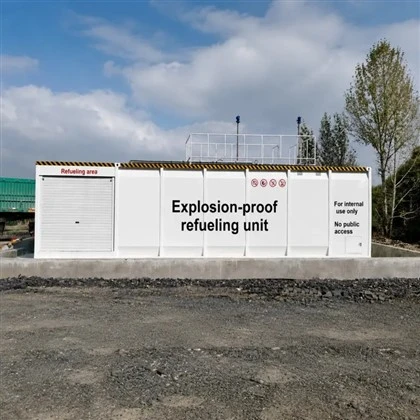
Hit me up, and let’s work out a solution for your needs.
References
Explosion-proof Fuel Station National Fire Protection Association. (2020). Standard for the Storage and Handling of Petroleum Liquids (NFPA 30).
Occupational Safety and Health Administration. (2021). Portable Diesel Fuel Tanks and Dispensing Systems.
U.S. Department of Energy. (2019). Mobile Fueling Systems for Remote Energy Operations.
Wildland Firefighter Safety Institute. (2022). Fuel Supply for Remote Wildfire Suppression Operations.
Shandong Jingcai Industry and Trade Co., Ltd.
As one of the most professional mobile explosion-proof fuel station manufacturers and suppliers in China, we also support customized service. With abundant experience, we warmly welcome you to wholesale high quality mobile explosion-proof fuel station in stock here from our factory. Contact us for free sample.
Address: Caojiazhuang Village Industrial Park, Lingcheng Town, Qufu City, Jining City, Shandong Province.
E-mail: shandongjingcai888@gmail.com
WebSite: https://www.sdjingcaicn.com/
