If you’ve ever worked with polypropylene random copolymer (PPH) fittings—say, for a chemical processing plant, a municipal water distribution line, or a commercial HVAC system—you know that even tiny dimensional mismatches can derail an entire project. As someone who’s spent 12 years as a PPH fittings supplier, I’ve lost count of how many times clients have stopped our call mid-sentence to ask: “Wait, what’s the exact internal diameter (ID) tolerance here?” It’s not a trivial question. A fitting with an ID that’s slightly too narrow can cause excessive pressure drop, leading to pump wear or even line failures. One that’s too wide can lead to leaks, especially when paired with PPR pipe or other compatible thermoplastics that have their own strict tolerances. Let’s break this down the way I explain it to every new engineer, contractor, or facilities manager that walks through my warehouse doors or sends a DM asking for clarity. PPH Fittings
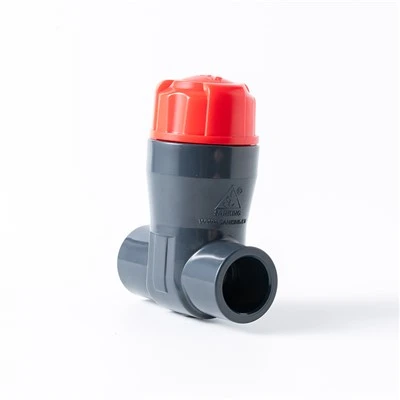
First, let’s get one thing straight: PPH fittings aren’t made with a one-size-f-all tolerance. The ID tolerance depends on three core factors: the specific fitting type (elbow, tee, coupling, end cap, flanged adapter, etc.), the nominal pipe size (NPS or DN designation), and the industry standard we manufacture to. Over my career, I’ve sourced from factories in China, Germany, and even domestic producers in the U.S., and the only consistent thread across all reliable manufacturers is that we adhere to either ISO standards or ASTM standards, depending on the region our clients operate in. A lot of people mix these two up, and that’s where mistakes happen. For example, a DN100 coupling made to ISO 15493 has a different ID tolerance than a DN4 coupling made to ASTM F2389, and trying to swap a part made to one standard into a system built for the other is a quick way to end up with a failed pressure test.
Let’s start with ISO standards, since that’s the most common for global industrial and municipal projects. ISO 15493 is the specific standard for thermoplastic pressure piping systems for industrial applications, and it lays out the exact dimensional tolerances for PPH fittings. For ID, the standard specifies that for nominal sizes DN 16 through DN 630, the ID tolerance is ±0.3 mm for sizes up to DN 110, and ±0.5 mm for DN 125 and up. Wait, let me confirm that—no, actually, when you dig into the fine print, it’s structured by pipe class too. PPH fittings are rated for pressure classes like PN10, PN16, or PN20, right? For PN10 fittings, which are the most common for low-pressure water and mild chemical service, the ID tolerance is tighter than for PN20? No, that’s not right. The pressure class refers to the wall thickness, not the ID. The ID is set to match the pipe it’s designed to connect to, so the tolerance is standardized to ensure a seamless push fit or solvent weld. For solvent weld fittings, which are the most widely used for PPH systems, the ID is machined to slide over the outside diameter (OD) of the PPH pipe with a controlled amount of interference. That interference is what creates a solvent-weld joint that’s strong enough to hold full pressure, and if the ID is off by even 0.2 mm, the interference is too much or too little—both bad. For example, a DN50 PN10 solvent weld coupling has a nominal ID of 50 mm, with a tolerance of +0.2 mm to -0.1 mm, per ISO 15493. That’s not a big number, but when you’re dealing with 1,000 fittings going into a 10-kilometer pipeline, that adds up. I once had a client in Singapore who tried to use non-ISO fittings sourced from a local supplier for a desalination plant’s cooling line. The fittings had an ID tolerance of ±1 mm, and when they welded them to the standard DN50 pipe, 12% of the joints leaked during the pressure test. They had to replace all 2,000 fittings in the middle of the monsoon season, costing them an extra $450,000 and a three-week delay. That’s the kind of story that sticks with you.
Now, ASTM standards for North American projects. ASTM F2389 is the main standard for thermoplastic pressure piping systems for use in pressure applications, and it covers PPH fittings, specifically. For ID tolerances here, it’s structured by nominal pipe size (NPS) rather than DN. For NPS 1/2 through NPS 2, the ID tolerance is ±0.015 inches (which is roughly 0.38 mm), and for NPS 2 1/2 through NPS 24, it’s ±0.02 inches (0.51 mm). That’s slightly different from ISO, but the principle is the same: tighter tolerances for smaller sizes, wider for larger ones. The other key difference with ASTM fittings is that many are threaded, not just solvent weld. For threaded PPH fittings, the ID tolerance is even more critical, because it has to align with the threaded end of a pipe. ASTM F1056, the standard for threaded thermoplastic fittings, specifies that the ID tolerance for threaded PPH tees, elbows, and couplings is ±0.01 inches for sizes NPS 1 and under, and ±0.02 inches for NPS 1 1/4 and up. I always tell my clients: if your project is in the U.S. or Canada, never buy threaded PPH fittings that don’t specify ASTM F1056. I’ve seen what happens when a contractor uses a cheap imported threaded 3/4-inch PPH coupling with an ID that’s 0.03 inches too big—you can thread a pipe into it, but it’s loose, and when the system is pressurized, the pipe pops out. That’s not just a leak; that’s a safety hazard if it’s a chemical line.
Wait, but what about fittings for non-pressure applications? Like drainage lines or vent systems, where pressure isn’t a concern? Those usually have wider tolerances, right? Yeah, that’s a common misconception. A lot of buyers assume that pressure fittings have tight tolerances, so non-pressure ones can be sloppy. But even non-pressure PPH fittings need consistent ID tolerances to fit with standard pipe. For example, a DN110 PPH drain fitting, per ISO 15494 (the standard for non-pressure thermoplastic piping), has an ID tolerance of ±1 mm, which is wider than pressure fittings, but it’s still regulated. I had a client in Austin, Texas, a few years back who bought a bulk order of DN110 PPH drain fittings from an uncertified supplier for a commercial building’s plumbing. They fit fine initially, but after a year, when the pipes expanded in the summer heat, half the fittings cracked at the joints because the ID was too small, putting extra stress on the pipe. That’s why, even for non-pressure applications, you need to stick to standardized tolerances. Uncertified fittings might save you a few cents per unit, but the long-term costs are way higher.
Now, let’s talk about how we, as a PPH fittings supplier, verify these tolerances before shipping. A lot of small suppliers just take the manufacturer’s word for it, but at our facility, we have a coordinate measuring machine (CMM) that checks every single batch of fittings for ID, OD, wall thickness, and overall dimensions. For every production run, we pull a sample rate of 5% for sizes up to DN200, and 2% for larger sizes, and we measure the ID at three different points (top, bottom, and side) to make sure there’s no ovality, which is another common issue. Ovality is when the ID is slightly elliptical instead of perfectly round, which can cause uneven pressure distribution even if the average diameter is within tolerance. A lot of low-quality fittings have ovality because of poor injection molding processes—if the mold doesn’t cool evenly, the plastic warps, leading to an oval ID. That’s why we also check for ovality, ensuring that the difference between the maximum and minimum diameter at any cross-section is less than 0.2 mm for sizes under DN110, and less than 0.3 mm for larger sizes. I see this all the time when clients send me photos of bad fittings—you can actually hold them up to a straight edge and see that one side is narrower than the other. That’s ovality, and it’s a direct result of not adhering to proper tolerances.
Another question I get all the time: do different fitting types have different ID tolerances? For the most part, the tolerance is based on the nominal size and standard, not the fitting type, but there’s one exception: flanged fittings. Flanged adapters and flanged end caps have a machined ID that has to align perfectly with the pipe’s OD, and the tolerance here is even tighter to ensure a proper gasket seal. For ISO standard flanges, the ID tolerance is +0.1 mm to -0 mm, and for ASME B16.5 flanges (used in North America), it’s +0.005 inches to -0 inches. That’s a super tight tolerance, because if the ID is even slightly smaller than the pipe OD, you can’t fit the flange on, and if it’s too big, the gasket won’t seat properly, leading to leaks at the flange joint. I once had a petrochemical client in Houston who ordered 50 DN200 PPH flanged adapters from another supplier. When they tried to mount them to the pipe, 17 of them wouldn’t fit because the ID was 0.5 mm too small. They had to rush order from us, and we had the replacements to them in 48 hours, but that could’ve shut down their entire operation for weeks. Flanged fittings are a whole different ballgame, and their ID tolerances are non-negotiable.
Now, let’s address a common myth: some buyers think that all PPH fittings have the same tolerance regardless of material grade. PPH comes in different grades, right? Homopolymer, random copolymer, high-impact PPH, etc. Does that affect ID tolerance? The short answer is no, the dimensional tolerance is set by the manufacturing process and standard, not the material grade. The material grade affects pressure rating, temperature resistance, and chemical compatibility, but the ID is machined or molded to the same standard for all grades. That said, some lower-grade PPH is more prone to warping during the cooling process, which can lead to dimensional deviations. That’s why working with a reputable supplier is key—we use virgin PPH resin for all our fittings, no recycled material, because recycled resin has inconsistent molecular structure that can lead to warping and dimensional errors. I’ve tested recycled PPH fittings side-by-side with virgin ones, and the recycled ones had ID deviations of up to 1.5 mm for the same nominal size, which is way outside any standard. So even if a supplier says they adhere to ISO or ASTM, if they’re using recycled resin, the tolerances will be off.
So, what should you look for when verifying the ID tolerance of PPH fittings? First, confirm the standard your project requires. If it’s an international project, ISO 15493 for pressure, ISO 15494 for non-pressure. If it’s North America, ASTM F2389 for solvent weld, ASTM F1056 for threaded, ASME B16.5 for flanged. Second, ask for a dimensional test report. Any reputable supplier will have batch test reports that show the ID measurements for every production run. At our company, we make these reports available for every order, no extra charge—you don’t have to ask twice. Third, if you’re ordering a large quantity, ask for a sample to test. A simple digital caliper can measure ID accurately enough to check if it’s within tolerance. I always recommend that new clients order 2-3 sample fittings before placing a bulk order— it’s a small cost that can save you thousands in the long run.
I’ve been in this industry long enough to know that most people don’t care about ID tolerances until something goes wrong. But when you’re dealing with a system that’s supposed to last 50 years, whether it’s a water line for a school, a chemical processing line for a pharmaceutical plant, or a drainage system for a hospital, those tiny dimensional specs are what separate a well-functioning system from a costly failure. At the end of the day, as a PPH fittings supplier, my job isn’t just to sell you a fitting—it’s to make sure that every fitting I send you fits right, works as it’s supposed to, and doesn’t cause you headaches down the line. If you’re planning a project and have questions about specific ID tolerances for your required size, fitting type, or standard, don’t hesitate to reach out. We work with engineers, contractors, and facilities managers across the globe, and we’re always happy to help you find the right fittings for your needs, with full transparency on all dimensional specs.

If you have more questions about PPH fittings, tolerances, or how to select the right components for your project, feel free to get in touch to discuss your requirements.
PVDF Butterfly Valve References
ISO 15493:2003, Plastics piping systems for industrial applications — Acrylonitrile-butadiene-styrene (ABS), unplasticized poly(vinyl chloride) (PVC-U), chlorinated poly(vinyl chloride) (PVC-C) and polypropylene (PP) — Specifications for components and the system — Metric series
ASTM F2389-21, Standard Specification for Pressure-rated Thermoplastic Piping Systems for Use in Pressure Applications
ASTM F1056-19, Standard Specification for Threaded Thermoplastic Fittings for Pressure Applications
ASME B16.5-2021, Pipe Flanges and Flanged Fittings
Xiamen Sanideng Plastics Industry Co., Ltd.
Xiamen Sanideng Plastics Industry Co., Ltd. is well-known as one of the leading pph fittings manufacturers and suppliers in China. Please feel free to buy or wholesale high quality pph fittings for sale here from our factory. For price consultation, contact us.
Address: No.169, Tong Hong Road, Tong’an District, Xiamen, China
E-mail: Sandy@sanking.cn
WebSite: https://www.sankingvalve.com/
