Hey guys, if you’ve ever worked with electronics—whether you’re a engineer designing a new smartphone, a hobbyist building a custom portable speaker, or a small business sourcing parts for wearables—you know how easy it is to overlook those tiny metal bits that hold everything together. I’m Jake, and I’ve been running an electronic stamping parts supplier for almost a decade, helping everyone from startup teams to big-name brands find the right parts for their devices. Let’s be real: picking the wrong stamping part doesn’t just lead to annoying delays—it can mess up performance, raise costs, and even make your product fail down the line. That’s why today, I’m breaking down exactly how to choose the right stamping parts for different electronics, no corporate jargon allowed. Electronic Stamping Parts
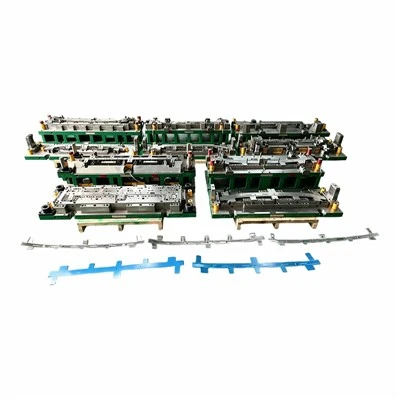
First off, let’s talk about what electronic stamping parts actually are, in plain terms. They’re thin metal pieces—usually steel, copper, brass, or aluminum—formed into tiny shapes via stamping machines, used for all kinds of core functions: connectors that link circuit boards, springs that hold buttons in place, shields that block unwanted signals, and terminals that let electricity flow smoothly. I’ve seen so many people skip the basics here, and it’s where mistakes start. Like, if you need a part for a high-temperature automotive sensor, using a cheap brass stamp that melts at 150°C is a recipe for disaster. So step one: start with your device’s specific use case, not just “I need a metal part.”
Let’s break this down by device type, because that’s where most people go wrong. One size never fits all, right? Let’s start with consumer electronics—think smartphones, wireless earbuds, portable chargers. These devices are all about two things: size and cost. Everyone wants their gadgets thinner, lighter, and cheaper to build. For consumer electronics, stamping parts need to be miniaturized, first and foremost. I remember a client who was making wireless earbuds a few years back; they tried to use a standard-sized copper connector, and it wouldn’t fit in the tiny space between the battery and the speaker. We had to custom-stamp a micro connector, which cost a little more upfront but let them keep their earbuds under 10mm thick. Also, consumer electronics deal with constant movement—pocketing, pulling earbuds in and out, dropping the charger on the floor. So the parts need good flexibility and corrosion resistance. Brass is a go-to here because it’s cheap, malleable, and resists rust. But wait, if you’re making a high-end smartphone, maybe go for tin-plated steel instead—it’s just a bit sturdier, so it won’t bend if someone sits on their phone. Another thing for consumer gear: lead time. If your product is launching for Black Friday, you can’t wait 6 weeks for custom parts. Make sure your supplier can do fast-turnaround stamping, which most of us can do these days with automated machines.
Next up, industrial electronics—like factory sensor panels, control systems, or IoT devices that run 24/7 in warehouses or outside. These are way more rugged than consumer stuff. Temperature extremes? Dust? Vibration from heavy machinery? Industrial stamping parts can’t just work when it’s 25°C indoors. For these, we usually recommend stainless steel or beryllium copper. Wait, beryllium copper is a big one—It’s super strong, conducts electricity great, and doesn’t spark, which is perfect for factories with flammable materials. I had an industrial client a couple years back who was building gas sensor controls in a chemical plant; they tried regular steel parts, and after 6 months, the vibration from the machinery caused the connectors to crack. Swapping to beryllium copper stamped terminals fixed that right away. Also, industrial electronics often need parts that can stand up to chemicals. If your device is going outside where it rains or gets exposed to fertilizers, aluminum with a powder coat might work, but stainless steel is better for long-term corrosion resistance. Pro tip here: don’t cut corners on industrial parts. Yeah, a cheaper brass stamp saves $0.05 per part, but if your sensor fails because the part rusts, you’re looking at $10,000 in downtime for a factory. That adds up way faster.
Then there’s automotive electronics—EVs, infotainment systems, ADAS (driver-assist tech). These are probably the strictest of the bunch. Cars go through crazy conditions: -40°C in the middle of winter, 80°C under the hood, mud, road salt, constant vibration from driving. For automotive stamping parts, you need to stick to high-grade materials, no exceptions. Tin plating is okay for some consumer parts, but automotive usually requires nickel or gold plating to resist corrosion from road salt. Also, ADAS parts (like camera connectors) need to be super precise—even a 0.1mm misalignment can cause a camera to not line up with the road, messing up lane-keep assist. That means your stamping supplier needs tight tolerances—like +/- 0.02mm, not the loose +/- 0.1mm you might get for a toy. I worked with an EV startup last year; their initial stamping parts had a 0.15mm tolerance, and when they tested the infotainment, the audio connectors wouldn’t seat properly because of that tiny gap. We adjusted the stamping dies to get the tolerance down, and it fixed the issue. Also, automotive has super strict compliance standards, like IATF 16949. Make sure your supplier is certified for that—no one wants parts that aren’t road-legal.
Wait, what about niche stuff? Medical electronics—like pacemakers, glucose meters, surgical tools. These parts have their own rules: biocompatibility, no metal contamination, ultra-smooth finishes (no sharp edges that could cut a patient). For medical stamping parts, we use materials like medical-grade stainless steel or titanium. And the stamping process has to be clean—no leftover metal shavings, because even a tiny fragment in a pacemaker could cause a problem. I had a client making glucose test strips a while back; they needed tiny gold-plated terminals on the strip. We use a precision stamping process with vacuum cleaning after each run to make sure no metal bits were left, which was a big part of getting their FDA approval. So if you’re in medical, don’t just go for a supplier—make sure they know the FDA’s requirements for stamping parts.
Now, let’s talk about the other big factors people sleep on: material properties and plating. I touched on materials earlier, but let’s dive deeper. Each metal has its own superpowers. Copper is great for conductivity—so if your part is a terminal that needs to carry a lot of current, copper is king. Steel is strong, so use that for structural parts like brackets. Brass is cheap and malleable, good for springs. Aluminum is lightweight, perfect for aerospace electronics. But here’s the thing: the material doesn’t just do one thing. Copper is conductive, but it’s also soft, so a copper connector might bend if it’s not reinforced. Steel is strong, but it’s heavier, so you don’t want it in a drone that needs to stay light.
Then plating—this is what protects the metal and makes it work better. Plating is a thin layer of another metal applied to the stamped part, and it’s way more important than most people think. Gold plating is the best conductivity, super corrosion-resistant, so we use it for high-end parts like camera connectors or medical devices. Tin plating is cheap, works for consumer electronics, but it can tarnish over time. Nickel plating is good for durability, so use that for automotive parts that need to stand up to road salt. And if your part is going to be in a place where other metals might rub together (like a button on a portable radio), zinc plating prevents galvanic corrosion, which is when two different metals react and break down. I’ve seen so many people skip plating to save money, and then their product fails after a year because the connector tarnished and stopped working. Don’t do that.
Another thing: tolerance and design flexibility. Stamping is great because you can make really small, precise parts, but only if your supplier has the right tools. If you’re designing a tiny part for a smartwatch, you need a supplier with automated stamping machines that can handle micro parts. If your design is more complex—like a connector with multiple pins that all have to line up—make sure your supplier can do custom die stamping, not just off-the-shelf parts. I always tell clients: don’t design a part that’s too complicated for stamping. It might look cool on paper, but if the stamping machine can’t form it without defects, it’ll cost you thousands in rework. Work with your supplier early—like, even before you finalize your design, shoot them a sketch or a CAD file. We can usually point out issues before you spend money on a prototype. For example, a client once designed a connector with a curved edge that was too sharp; stamping would have caused cracks there. We suggested rounding the edge a little, and it fixed the problem without changing the part’s function.
Wait, let’s talk about cost. I get it, budgets are tight. But don’t just go for the cheapest stamping part. Let’s do a quick math example: a consumer electronics brand needs 100,000 connectors. Cheap brass parts are $0.02 each, good tin-plated brass is $0.03 each. That’s a $1,000 difference upfront. But if the cheap parts tarnish, you have to recall 100,000 units, which costs $50,000 minimum (not to mention your brand’s reputation). So the extra $1,000 is a no-brainer. Also, some suppliers offer bulk discounts, so if you can order more parts at once, you’ll save per unit. But don’t overorder—stamped parts don’t last forever, especially if they’re not stored properly. Keep them in a cool, dry place away from moisture to prevent corrosion.
Now, how do you actually find a good supplier? Not all stamping shops are the same. I’ve seen suppliers that do cheap, low-quality parts for toys, and others that do high-precision automotive parts. Look for certifications—ISO 9001 for general quality, IATF 16949 for automotive, FDA for medical. Ask about their lead times: can they do prototyping in 5 days, instead of 2 weeks? Can they handle small orders if you’re a startup, or only big bulk orders? Also, ask about their quality control process. Do they do 100% inspection on each part, or just random samples? We do 100% visual inspection plus automated measurement for all our parts, because even one bad part can ruin a whole batch of your device. And if a supplier says “we can make any part,” that’s a red flag. No one can do everything—we specialize in electronics stamping, not metal stamping for construction parts.
Wait, let’s wrap this up with a quick checklist you can use right now, no matter what device you’re working on. First: define your device’s operating conditions. Is it in consumer, industrial, automotive, medical? What temperatures, humidity, vibration, chemicals will it be exposed to? Second: pick a material that fits. Conductivity? Strength? Weight? Third: add the right plating. Corrosion resistance? Durability? Cost? Fourth: nail down tolerances. How precise does the part need to be? Fifth: work with a supplier that matches your needs. Certifications, lead times, quality control, specialty experience.
And if you’re stuck, or you need a second opinion—whether you’re a startup designing your first IoT sensor, or a big brand reworking your automotive connectors—hit me up. We’re always happy to walk through your project, answer questions, and even help tweak your design to make it cheaper and more reliable. No sales pitch required, just real advice from someone who’s been in this game for years.
Before I wrap up, let’s make sure I didn’t skip anything. Oh, prototyping! Always get a prototype before you commit to a full order. Stamping prototypes are quick and cheap, so you can test the part for fit, function, and durability before you mass produce. I once had a client who ordered 50,000 parts without a prototype, and they didn’t fit their circuit board. We had to re-stamp all of them, which cost twice as much as the prototypes would have. Prototype = money saved, that’s non-negotiable.
Another thing: sustainability. A lot of people don’t talk about this, but electronic parts are often thrown away with devices, so making them recyclable is a big deal. Stamped metal parts are super easy to recycle, so choosing metal over plastic is a win for sustainability. Also, some suppliers use recycled metal for their stamping parts, which cuts down on waste. We do that here, because it’s good for the planet and it keeps costs low for clients.
So yeah, choosing the right electronic stamping parts isn’t rocket science, but it does take thinking beyond the part itself. It’s about matching the part to what your device actually goes through, not just what looks good on a spec sheet. Skip the cheap shortcuts, work with a supplier who knows electronics, and test prototypes. That’s how you avoid headaches and make a product that works for years.

If you’re ready to chat about your specific parts—whether it’s small connectors, springs, shields, or anything else for your device, feel free to connect to discuss your project needs.
Progressive Dies References:
- Automotive Industry Action Group. (2021). IATF 16949:2016 Standard for Automotive Quality Management Systems.
- International Organization for Standardization. (2022). ISO 9001:2015 Quality Management Systems Requirements.
- FDA. (2020). Guidance for Industry: Biocompatibility of Medical Devices.
- Copper Development Association. (2019). Properties of Copper Alloys for Electrical Stamping Applications.
Dongguan Changdong Tool & Die Co., Ltd.
With abundant experience, we are one of the most reliable electronic stamping parts manufacturers and suppliers in China. Please feel free to buy advanced electronic stamping parts made in China here from our factory. Good service and quality products are available.
Address: No. 56-B, Fumin South Road, Dalang Town, Dongguan City, Guangdong Province, China
E-mail: sales@stamping-die.com
WebSite: https://www.metalstampingdie.com/
