If you’ve stepped into a modern warehouse lately, chances are you’ve seen them: quiet, wheeled robots gliding along taped or marked paths, moving pallets from loading docks to storage racks, or ferrying orders to packing stations. For years, I’ve supplied automated guided vehicles (AGVs) to warehouses across industries—from e-commerce giants to food and beverage distributors—and I’ve watched firsthand how these machines aren’t just a trendy upgrade; they’re a foundational shift in how warehouses operate. Too many people still write AGVs off as “replacing human workers,” but that’s never been my experience. The advantages run far deeper than cost savings, and they address some of the most persistent pain points that warehouse managers struggle with day in and day out. Let’s break down what makes AGVs a game-changer for today’s warehouse. AGV
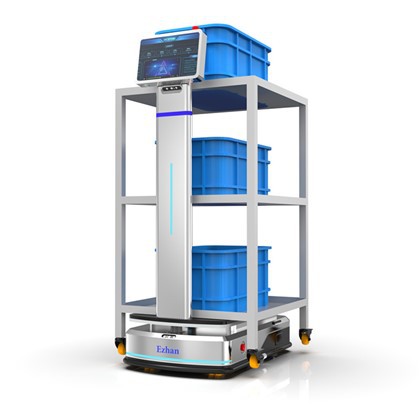
First, there’s consistency, and it’s impossible to overstate how valuable that is in an environment where even small delays or errors add up fast. Human workers are incredible—they adapt to unexpected situations, problem-solve on the fly, and bring creativity to roles that require it. But they’re not consistent. I’ve walked into warehouses where a single order picker might miss three stops in a shift, or arrive 10 minutes late to a transfer because of a commute or a personal issue. AGVs don’t have those gaps. Once programmed, they follow their route exactly, every single time. An AGV tasked with moving a 2,000-pound pallet from dock 3 to aisle 12 will take the same path, at the same speed, in the same amount of time, 24 hours a day, 7 days a week. That consistency translates directly to predictable timelines for order fulfillment, which is make-or-break for e-commerce brands racing to meet same-day or next-day delivery promises. Last year, a client in the retail space told me that after deploying our AGVs, their on-time order rate jumped 12% in the first six months—no overtime, no extra staff, just robots showing up when they’re supposed to.
Alongside consistency comes safety, an area where AGVs solve some of the riskiest parts of warehouse work. Let’s be honest: Warehouses are dangerous places. Heavy pallet jacks, fork trucks moving around blind corners, repetitive lifting—each year, thousands of workers get injured on the job, and those injuries cost companies millions in workers’ comp, downtime, and retraining. AGVs eliminate a lot of that risk. Unlike fork truck operators, who might be distracted by a text or a conversation with a colleague, AGVs are programmed with geofencing, obstacle detection sensors, and pre-defined speed limits. They’ll slow down automatically if a worker steps in their path, and they never speed through a loading dock or a tight storage aisle. I worked with a food distribution client that had seen three fork truck-related accidents in one year before switching to AGVs. In the two years since deployment, they haven’t had a single incident involving an AGV. They also told me that employee morale improved, too—workers stopped worrying about close calls with heavy equipment, which made them more engaged in their roles. That’s a win no cost spreadsheet can fully capture.
Then there’s space optimization, a huge deal as real estate costs continue to rise. Warehouses operate on tight margins, so every square foot counts. Traditional material handling equipment—fork trucks, pallet jacks, manual carts—requires wide pathways, because they need room to turn, stop, and maneuver. AGVs, though, especially the newer ones that use laser guidance or natural feature navigation (instead of fixed tapes or wires on the floor, which limit layout changes), can navigate far tighter spaces. A fork truck might need a 12-foot-wide aisle to turn, but a narrow AGV can move in an aisle just 7 feet wide, because it turns on a smaller radius. That extra space doesn’t just free up room for more storage racks; it lets warehouses expand their capacity without renting extra space. One of our clients, a third-party logistics provider (3PL), had a 100,000-square-foot warehouse they thought was maxed out. After replacing half their manual cart systems with AGVs, they added 15% more storage slots just by narrowing their aisles. For a 3PL that charges by the square foot, that’s a direct boost to revenue.
Scalability is another advantage that makes AGVs perfect for today’s dynamic supply chain. A decade ago, warehouses could plan for a steady, annual growth in order volume. Now, demand swings wildly—think holiday surges, flash sales, or unexpected shifts from global events. When demand spikes, managers used to have to hire and train dozens of temporary workers fast, only to lay them off when the rush ended. That’s costly, and it leads to errors as untrained staff learn on the job. AGVs, though, can be added or reconfigured quickly. Our AGV system lets clients add one or 20 robots in a matter of days, not months, and adjust their routes or tasks as needed. Last holiday season, a e-commerce client added 30 AGVs to their existing fleet to handle a 40% jump in orders. They didn’t have to hire a single temporary material handler for those core transport roles. When the season ended, they just parked the extra AGVs (or reallocated them to other parts of their operation) and went back to their regular setup. That kind of flexibility is unheard of with fixed infrastructure like conveyor belts, which are expensive to install and impossible to move quickly.
Cost savings, of course, are a big part of why warehouses invest in AGVs—but it’s not just about cutting labor costs. A lot of managers I talk to are surprised to learn that while AGVs do reduce the number of workers needed for repetitive transport tasks, the real savings come from reduced error, lower overhead, and less downtime. Human workers cost money in wages, benefits, and training, but they also cost money when they make mistakes. A misplaced pallet can lead to a lost order, a damaged product, or even a damaged rack. AGVs, by contrast, have error rates that are almost zero when calibrated correctly. One client in the automotive parts industry told me that before AGVs, they were losing an estimated $50,000 a year in misrouted parts and damaged inventory. After switching, those losses dropped to less than $5,000 annually. They also saved on overtime: AGVs don’t need overtime pay, so they can run through the night, letting the warehouse receive and process incoming shipments without having to pay workers for late shifts. Over time, those savings add up to a return on investment (ROI) that most warehouses see in 18 to 24 months—faster than many other capital investments.
Wait, but I should address a common concern I hear: “What about if my warehouse is too small, or has too unique a layout, for AGVs?” The truth is, modern AGV technology has come a long way from the early, rigid systems that required floor tapes or wires. Our AGVs, for example, use natural feature navigation, which means they map the warehouse’s existing layout using cameras and sensors—no modifications needed. That means even warehouses with irregular floor plans, low ceilings, or existing storage racks can deploy AGVs without tearing up floors or rewiring. I’ve worked with small warehouses of 20,000 square feet and large ones of 500,000 square feet, all with different layouts, and the AGVs adapt every time. They also integrate with warehouse management systems (WMS), so they don’t work in a silo. They pull orders directly from the WMS, update inventory levels in real time, and communicate with other equipment—like conveyor systems or packing stations—so the entire operation runs as a single, coordinated system. That kind of integration eliminates the silos that often cause delays in busy warehouses.
Another underrated advantage is data collection. Every AGV tracks its movement, speed, location, and even the weight of the load it’s carrying. That data is automatically fed into analytics tools, so warehouse managers can see exactly how their operation is performing. They can spot bottlenecks—like a particular aisle where AGVs are backing up, or a time of day when transport tasks are taking longer than expected. Before AGVs, that data was hard to come by; managers might track on-time rates, but they couldn’t see exactly why a delay happened, or where it occurred. Now, they can adjust their layout, their staffing, or their task assignments to fix those bottlenecks. One client told me that after a month of using our AGVs’ data, they realized their packing station was understaffed, not their transport team—so they moved a few workers from transport to packing, which cut overall order time by 10%. That’s the kind of insight that doesn’t come from manual tracking.
I know that adopting new technology can feel overwhelming, especially for warehouse managers who’ve been doing things a certain way for years. But from my perspective, AGVs aren’t here to replace human workers—they’re here to take over the repetitive, risky, time-consuming tasks that workers don’t want to do, so they can focus on the work that matters more: problem-solving, caring for inventory, and interacting with customers. I’ve seen workers on warehouse floors go from spending 60% of their time pushing carts around the warehouse to focusing on quality control, which makes the whole operation better. The best part is, AGVs aren’t a one-size-fits-all solution. We work with every client to design a system that fits their specific needs, whether they need a fleet of five AGVs for a small retail warehouse or 50 for a large 3PL.

If you’re a warehouse manager, operations director, or business owner tired of inconsistent order rates, safety incidents, wasted space, or inflexible operations, AGVs might be the solution you’ve been looking for. The supply chain isn’t going back to the way it was before—demand will keep fluctuating, margins will stay tight, and customers will expect faster, more reliable service. AGVs aren’t just a trend; they’re a tool to build a warehouse that can handle whatever comes next. To learn more about how our AGVs can work for your operation, reach out to our team to schedule a custom consultation and find out what benefits we can deliver for your specific warehouse.
Hybrid Robot References
- Material Handling Industry Association. (2022). AGV and AMR Adoption Trends in North American Warehousing.
- Occupational Safety and Health Administration. (2021). Warehouse Safety: Reducing Material Handling Related Injuries.
- Global Supply Chain Council. (2023). Warehouse Space Optimization Strategies for High-Growth E-commerce Brands.
- Automated Guided Vehicle Systems Association. (2022). ROI Analysis of AGV Deployments in Mid-Size Warehouses.
- Warehousing Education and Research Council. (2023). Scalable Automation for Dynamic Demand Environments.
Shenzhen Ezhan Technology Co., Ltd.
We’re known as one of the most reliable AGV manufacturers and suppliers in China. With abundant experience, we warmly welcome you to buy bulk customized AGV from our factory. If you have any enquiry about cooperation, please feel free to email us.
Address: Room 1808, 1809, 1810, Building 2, Aipark, Baolong 4th Road, Longgang District, Shenzhen City
E-mail: sales01@ezhankeji.com
WebSite: https://www.ezhanrobot.com/
