Hey there! As a supplier of Reverse T Structure Hmc Machines, I’ve faced loads of questions from customers like you on how to pick the right tool for these amazing machines. I get it; it’s not always a walk in the park. But don’t worry, I’m here to break it down for you in a simple way. Reverse T Structure Hmc Machine

Understanding the Reverse T Structure Hmc Machine
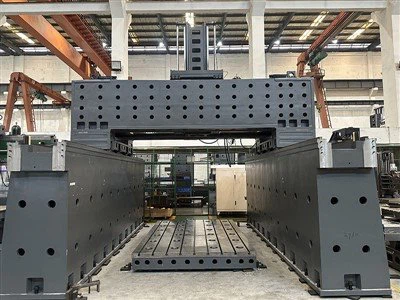
First things first, let’s talk a bit about the Reverse T Structure Hmc Machine itself. These machines are pretty cool because they offer a unique setup that combines high precision with great stability. The “Reverse T” design gives them an edge in handling complex machining tasks. They’re used in various industries, from aerospace to automotive, to make all sorts of parts.
Now, if you’re using a Reverse T Structure Hmc Machine, you know that having the proper tools is key to getting the best results. But with so many tools out there, how do you choose? Well, there are a few key factors you need to consider.
Factors to Consider When Selecting Tools
1. Material of the Workpiece
The material you’re working on is super important. Different materials require different tools. For example, if you’re dealing with soft materials like aluminum, you can use tools with a higher cutting speed. High – speed steel (HSS) tools are often a good choice here. They’re relatively cheap and can do the job well on aluminum.
On the other hand, if you’re machining hard materials like stainless steel or titanium, you’ll need something tougher. Carbide tools are your go – to in this case. They can withstand the high temperatures and forces generated when cutting these hard materials. Using the wrong tool for the material can lead to poor surface finish, tool wear, and even damage to the machine.
2. Machining Operation
What kind of machining operation are you performing? Are you drilling, milling, or boring? Each operation requires a specific type of tool.
For drilling, you’ll need drill bits. The size of the hole you want to make will determine the size of the drill bit. There are also different types of drill bits, like twist drills and center drills. Twist drills are the most common and can be used for a variety of materials. Center drills, on the other hand, are used to create a starting point for the twist drill.
When it comes to milling, you have end mills, face mills, and ball nose mills. End mills are great for making slots and pockets. Face mills are used for large – area milling on flat surfaces. Ball nose mills, as the name suggests, have a rounded end and are used for machining curved surfaces.
Boring operations require boring bars. These are designed to enlarge existing holes with high precision.
3. Machine Capabilities
You also need to think about the capabilities of your Reverse T Structure Hmc Machine. What’s the maximum spindle speed? What’s the power of the machine? These factors will limit the type of tools you can use.
If your machine has a high – speed spindle, you can use tools that are designed for high – speed machining. These tools are often made of advanced materials and can cut faster, which means you can finish your jobs more quickly. However, if your machine has a lower power output, using too aggressive of a tool might overload the machine and cause problems.
4. Tool Coatings
Tool coatings can play a big role in the performance of your tools. Coatings like titanium nitride (TiN), titanium carbonitride (TiCN), and aluminum titanium nitride (AlTiN) can improve the tool’s hardness, wear resistance, and heat resistance.
For example, a TiN – coated tool is great for general – purpose machining. It gives the tool a golden color and can increase its lifespan by reducing friction and wear. TiCN coatings are harder than TiN and are often used for high – speed machining of steels and cast irons. AlTiN coatings are even more heat – resistant, making them suitable for machining hard materials at high speeds.
5. Surface Finish Requirements
The surface finish you want to achieve on your workpiece also affects your tool choice. If you need a very smooth surface, you might want to use a tool with a fine – tooth design or a tool that can be set to a lower feed rate.
For example, in some precision machining applications, like making components for medical devices, a high – quality surface finish is crucial. In these cases, using a polished or a specially – coated tool can help you achieve the desired surface quality.
Types of Tools for Reverse T Structure Hmc Machines
Indexable Inserts
Indexable inserts are a popular choice for Reverse T Structure Hmc Machines. They’re made of carbide or other hard materials and can be easily replaced when they wear out. Instead of re – sharpening the entire tool, you just change the insert.
There are different shapes and sizes of indexable inserts for different machining operations. For example, triangular inserts are often used for turning and facing, while square inserts can be used for slotting and profiling.
Solid Carbide Tools
Solid carbide tools are another great option. They’re made entirely of carbide, which gives them excellent hardness and wear resistance. These tools are ideal for high – precision machining and can be used for a variety of operations, including milling, drilling, and boring.
One of the advantages of solid carbide tools is that they can maintain their sharpness for a long time, which means you can achieve consistent results over a large number of workpieces.
HSS Tools
High – speed steel (HSS) tools are still widely used, especially for some light – duty or general – purpose machining. They’re more affordable than carbide tools and can be easily sharpened.
HSS drills, for example, are commonly used in small – scale machining operations or when working on softer materials. However, they may not be as suitable for high – speed or high – precision machining as carbide tools.
Making the Final Decision
Once you’ve considered all these factors, it’s time to make a decision. You might want to start by looking at the tool catalogs from reputable tool manufacturers. Many manufacturers provide detailed information about the performance of their tools, including the recommended cutting parameters for different materials and operations.
You can also talk to other users of Reverse T Structure Hmc Machines. Online forums and industry groups are great places to get real – world feedback on different tools. What works well for others in your industry might work well for you too.
Another option is to ask for tool samples from suppliers. This way, you can test the tools on your own machine and see how they perform. It’s always better to try before you buy, especially when it comes to expensive tools.
Wrapping Up and Reaching Out
Selecting the appropriate tool for your Reverse T Structure Hmc Machine is a crucial step in getting the best results. It takes a bit of research and consideration, but if you follow the tips I’ve shared, you’ll be well on your way to making the right choice.
As a supplier, I’m here to help you every step of the way. If you have any questions about tool selection, or if you’re interested in learning more about the tools we offer for Reverse T Structure Hmc Machines, don’t hesitate to reach out. We can start a conversation about your specific needs and find the perfect tools for your machining operations.
5 Axis Machining Center Let’s get in touch and start making your machining projects more efficient and profitable!
References
- ASM Handbook: Machining, ASM International
- “Machining Fundamentals” by Society of Manufacturing Engineers
- “Modern Machining Technology” by Douglas A. Spenser
Smartech Machinery & Equipment Co., Ltd.
As one of the most professional reverse t structure hmc machine machine manufacturers and suppliers in China, we also support customized service. Please rest assured to buy bulk reverse t structure hmc machine machine made in China here from our factory. Contact us for more details.
Address: Room 2832, Changping Commercial Mansion, Shihua Road, Futian Free Trade Zone, Shenzhen, China
E-mail: smartech@smartechcnc.cn
WebSite: https://www.smartech-cnc.com/
