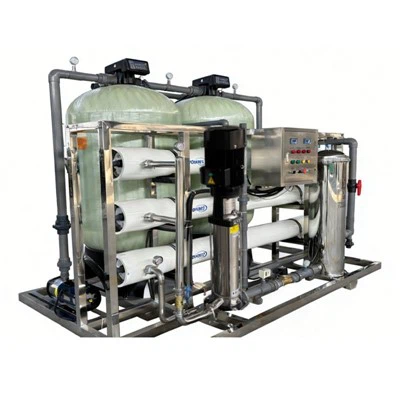
I work as a sales representative for an ion exchange equipment supplier, and I understand that adjusting the parameters of ion exchange equipment can be a tricky yet crucial task for many of our clients in various industries, from water treatment to chemical processing. In this blog, I’ll share some crucial information on how to adjust the parameters of ion exchange equipment, based on our long – term experience in the field. Ion Exchange Equipment
Understanding the Basics of Ion Exchange Equipment
Before diving into parameter adjustment, it’s essential to understand the basic principles of ion exchange equipment. Ion exchange is a reversible chemical reaction where ions in a solution are exchanged for other ions of a similar charge that are attached to an insoluble solid matrix. The equipment typically consists of a resin bed, where the ion – exchange resin is housed, and a control system that manages the flow of the solution and the regeneration process.
The main parameters that need adjustment in ion exchange equipment include flow rate, regeneration cycle, regeneration chemical dosage, and resin bed depth. These parameters are interrelated, and a change in one can affect the performance of the entire system.
Adjusting the Flow Rate
The flow rate of the solution through the ion exchange resin bed is a critical parameter. If the flow rate is too high, the ions in the solution may not have enough time to exchange with the ions on the resin, leading to incomplete ion removal. Conversely, if the flow rate is too low, the system’s throughput is reduced, which may not meet the production requirements.
To adjust the flow rate, you can use the control valves on the inlet and outlet of the ion exchange column. Start by determining the optimal flow rate based on the type of resin, the concentration of the ions in the feed solution, and the desired level of ion removal. You can refer to the resin manufacturer’s specifications for the recommended flow rates.
For example, in a water softening application using a strong acid cation exchange resin, the typical flow rate might range from 5 to 15 gallons per minute per cubic foot of resin. If the initial flow rate is set too high and the water hardness is not being adequately reduced, you can gradually close the inlet valve to decrease the flow. Continuously monitor the quality of the effluent water and make further adjustments as needed.
Regeneration Cycle
The regeneration cycle is the process of restoring the ion – exchange capacity of the resin after it has become exhausted. Determining the right regeneration cycle is essential for maintaining the efficiency of the ion exchange equipment.
There are two main types of regeneration cycles: time – based and capacity – based. In a time – based regeneration cycle, the regeneration process is initiated at fixed intervals, such as every 24 hours or once a week. This method is simple but may not be the most efficient, as it does not take into account the actual usage and exhaustion of the resin.
Capacity – based regeneration is a more advanced approach. It uses sensors to monitor the ion concentration in the effluent stream. When the ion concentration reaches a pre – set level, indicating that the resin is nearing exhaustion, the regeneration process is triggered. This method ensures that the resin is regenerated only when necessary, saving on regeneration chemicals and energy.
To adjust the regeneration cycle, you first need to analyze the historical data of the ion concentrations in the feed and effluent solutions. Based on this data, you can determine the average time or the amount of processed solution before the resin needs regeneration. If you are using a time – based system, you can adjust the timer settings accordingly. For a capacity – based system, you need to calibrate the sensors accurately and set the appropriate ion – concentration thresholds.
Regeneration Chemical Dosage
The amount of regeneration chemicals used in the regeneration process is another crucial parameter. If the dosage is too low, the resin may not be fully regenerated, and its ion – exchange capacity will gradually decrease. If the dosage is too high, it not only increases the operating cost but may also damage the resin.
The type of regeneration chemicals depends on the type of ion – exchange resin. For example, strong acid cation exchange resins are commonly regenerated with hydrochloric acid (HCl) or sulfuric acid (H₂SO₄), while strong base anion exchange resins are regenerated with sodium hydroxide (NaOH).
To determine the correct regeneration chemical dosage, you need to consider the resin’s capacity, the degree of exhaustion, and the chemical’s regeneration efficiency. The resin manufacturer usually provides guidelines on the recommended dosage.
You can start by following these guidelines and then fine – tune the dosage based on the results of the regeneration process. Monitor the quality of the regenerated resin and the effluent water after regeneration. If the resin’s performance does not meet the requirements, you may need to increase the chemical dosage slightly. However, be cautious not to exceed the recommended maximum dosage.
Resin Bed Depth
The resin bed depth affects the contact time between the solution and the resin, which in turn influences the ion – exchange efficiency. A deeper resin bed generally provides a longer contact time and more complete ion exchange, but it also increases the pressure drop across the bed and may require more regeneration chemicals.
When adjusting the resin bed depth, you need to balance the ion – exchange efficiency with the operating cost and pressure drop. For applications with high – concentration ion solutions or strict ion – removal requirements, a deeper resin bed may be necessary. On the other hand, for low – concentration solutions, a shallower resin bed may be sufficient.
If you need to adjust the resin bed depth, you can either add or remove resin from the ion exchange column. Make sure to follow the correct procedures for resin handling to avoid resin damage. After adjusting the resin bed depth, retest the system’s performance and adjust other parameters such as flow rate and regeneration cycle as needed.
Monitoring and Optimization
Once you have adjusted the parameters of the ion exchange equipment, continuous monitoring is crucial. Use online sensors to monitor the ion concentrations in the feed and effluent solutions, the pressure drop across the resin bed, and the flow rate. Regularly analyze the data to detect any changes in the system’s performance.
If you notice any deviations from the expected performance, such as a decrease in ion – removal efficiency or an increase in pressure drop, you need to investigate the cause. It could be due to a change in the feed – solution characteristics, resin fouling, or incorrect parameter settings.
Based on the monitoring results, you can optimize the parameters further. For example, if you find that the resin is being regenerated too frequently, you can increase the resin bed depth or adjust the regeneration cycle to save on regeneration chemicals.
Conclusion
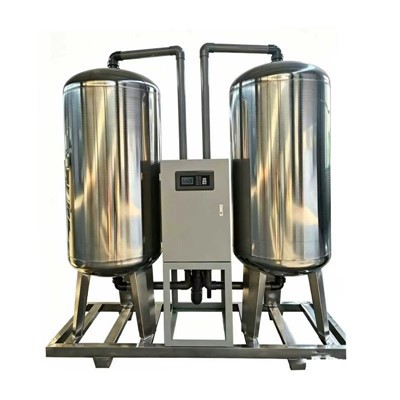
Adjusting the parameters of ion exchange equipment is a complex but essential process for ensuring its efficient and reliable operation. By understanding the basic principles of ion exchange, carefully adjusting the flow rate, regeneration cycle, regeneration chemical dosage, and resin bed depth, and continuously monitoring and optimizing the system, you can achieve the best performance from your ion exchange equipment.
RO Purified Water Equipment If you are facing challenges in adjusting the parameters of your ion exchange equipment or are looking to purchase high – quality ion exchange equipment, we are here to help. Our team of experts has extensive experience in the field and can provide you with professional advice and customized solutions. Contact us to start a discussion about your specific needs and explore how our ion exchange equipment can meet your requirements.
References
- "Ion Exchange Principles and Applications" by F. Helfferich
- "Water Treatment Unit Processes: Physical and Chemical" by David W. Hendricks
- Technical brochures from leading ion – exchange resin manufacturers.
Shandong Yanuo Environmental Protection Equipment Co., Ltd.
We’re well-known as one of the leading ion exchange equipment manufacturers and suppliers in China, featured by quality products and good price. Please rest assured to buy bulk ion exchange equipment made in China here from our factory. Customized orders are welcome.
Address: North Side of the Road, 1,000 Meters West of the Intersection of Fenghuangshan West Road and Provincial Highway S102, Wangfu Subdistrict, Qingzhou City, Weifang City, Shandong Province.
E-mail: ynhb.499973983@gmail.com
WebSite: https://www.zkyaruo.com/
